


Contact us
Your License. Our Fight.
Get a free initial consultation for your traffic, criminal, and personal injury matters.


You forgot about the court date. Or maybe you thought you were done with a case months ago, and now something feels off, a call from an unfamiliar number, a friend who mentioned seeing your name somewhere, a nagging feeling that you missed something you shouldn’t have. If you’re wondering whether Florida has a bench warrant sitting out there with your name on it, the sooner you find out, the more options you have to actually deal with it.
Florida Ticket Firm’s traffic attorneys help clients throughout Florida address bench warrants and the underlying charges behind them. Call us today at (813) 276-6000 to talk through your situation.
A bench warrant is issued directly by a judge, typically after someone fails to appear for a scheduled court date, fails to pay a court-ordered fine, or violates a condition of probation or bond. Unlike a warrant issued based on a new criminal investigation, a bench warrant arises out of an existing case, essentially the court’s way of compelling someone back into the process they were already part of.
These terms get used somewhat interchangeably, but they carry slightly different meanings. An arrest warrant is generally issued based on probable cause that a person committed a crime, often before any court proceedings have begun. A bench warrant, by contrast, is issued by a judge in connection with an existing case, usually due to a missed court appearance or a violation of court orders. A capias is essentially another term for a bench warrant in Florida, an order directing law enforcement to take a person into custody and bring them before the court.
Bench warrants in Florida commonly get issued for a handful of recurring reasons:
In many cases, the person involved did not intend to skip anything. A notice went to an old address, a court date got confused with another hearing, or a family emergency simply got in the way. Bench warrants do not require intent to avoid the court. They can be issued based purely on the fact that someone did not show up or comply, regardless of the reason behind it.
If you suspect a bench warrant may exist in your name, there are a few ways to check.
Most Florida counties maintain an online case search tool through the Clerk of Court’s website, allowing you to look up active cases and, in many instances, see whether a warrant has been issued in connection with one. Since Florida’s court system is organized by county, you generally need to check the specific county where the original case was filed.
Beyond the Clerk of Court, many county sheriff’s offices maintain active warrant search tools as well. The Florida Department of Law Enforcement’s wanted persons search can also help identify statewide wanted person listings, though it is not necessarily comprehensive for every local bench warrant. Public records databases can offer another starting point, though these tools vary in accuracy and how current their information is.
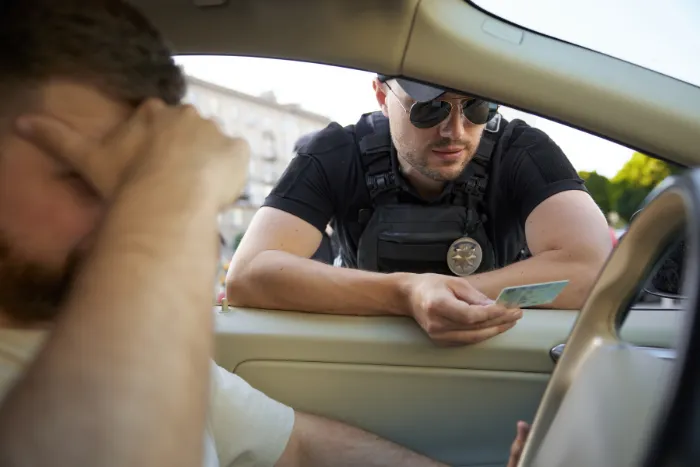
Ignoring a bench warrant does not make it disappear. It typically remains active until it is resolved, meaning you could be arrested at almost any time, including during a routine traffic stop for something as minor as a broken taillight. Depending on the underlying case, an outstanding bench warrant can also affect bond eligibility, complicate a pending criminal charge, or in some cases contribute to driving with a suspended license issues if your license was affected by the underlying case. The longer a warrant sits unresolved, the more it tends to complicate the original matter.
Clearing a bench warrant generally requires either appearing before the court voluntarily or having an attorney file a request on your behalf asking the court to recall or withdraw the warrant.
An attorney can often file a motion to quash or set aside a bench warrant, particularly when there is a reasonable explanation for the missed appearance, such as a notice sent to an outdated address or a documented emergency. Depending on the judge and the circumstances, this can sometimes resolve the warrant without requiring the person to be taken into custody, though every case depends on the specific facts and the judge’s discretion.
Addressing a bench warrant proactively, rather than waiting to be picked up unexpectedly, generally puts you in a stronger position with the court. Florida Ticket Firm’s attorneys have collectively contested over a million tickets and built a 99% success rate, giving them a level of experience most drivers never expect to need but are grateful to have when a warrant is on the line. Our team can review your specific case, including any underlying traffic ticket or reckless driving charge that led to the warrant, and help determine the best way to bring the matter to a resolution while minimizing disruption to your life.
We offer representation in both English and Spanish, and consultations are free, so there is no reason to keep guessing about your situation. If you believe you may have an active bench warrant in Florida, contact Florida Ticket Firm at (813) 276-6000 to discuss your situation before it escalates further.
You can check your county’s Clerk of Court case search tool, contact the county sheriff’s office, or use the Florida Department of Law Enforcement’s wanted persons search. An attorney can also help confirm your status directly and discreetly.
No. A bench warrant generally remains active until it is formally resolved through the court, whether by voluntarily appearing, having an attorney address it on your behalf, or, in some cases, through a motion to quash or recall the warrant.
In some cases, yes, particularly when an attorney is able to arrange a resolution with the court ahead of time, such as through a scheduled appearance or a motion addressing the underlying issue. Whether this is possible depends on the specific circumstances of the case and the judge involved.