



Contact us
Your License. Our Fight.
Get a free initial consultation for your traffic, criminal, and personal injury matters.


The most common reason people contact the police in the US is a traffic stop.
In 2011, over 26 million people came into contact with police through traffic stops.
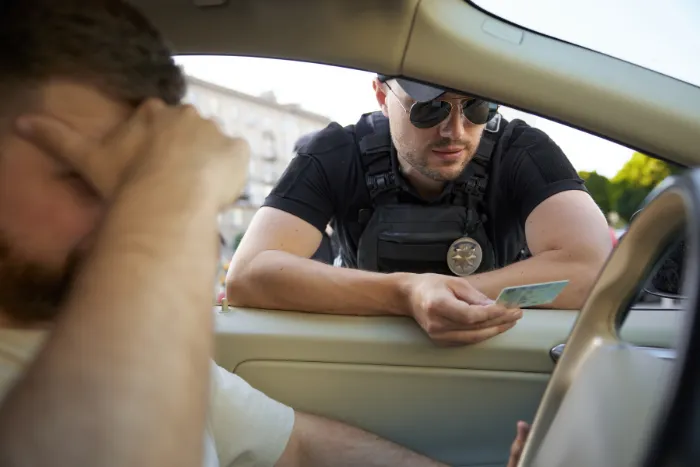
Most people tend to panic when they see a police car in their rearview mirror. They know they have constitutional rights. But they also know they can get into trouble if they don’t take the right steps.
Knowing what to do and say during a traffic stop can help prevent your case from escalating. It may even help you to avoid getting a ticket.
Here are your rights and the things to do if you’re pulled over for a traffic stop. Contact Florida Ticket for a free consultation or call (813) 276-6000 to speak to someone right away!
If you notice a Florida State Police car following you with flashing lights or a blaring siren, pull over to the right. Doing so quickly and safely lets the officer know you’re complying.
Failing to pull over may raise suspicion or lead to another charge. Pulling over immediately isn’t an admission of guilt. It signals to the officer that you know what’s going on.
Also, stopping right away puts you in a better position to figure out where and how you violated traffic laws.
Being close enough to where the officer claims you violated traffic laws enables you to study the scene. This may help you to identify holes in the officer’s allegations.
When pulling over, use turn signals to change lanes. Stop as far to the right as possible to mitigate the risk of other vehicles hitting your car.
Once you’ve pulled over, discard any chewing gum or cigarette (if you have one).
Show respect and courtesy, even if the police officer seems aggressive. You have nothing to lose by being courteous and a lot to lose by being rude or argumentative.
At this point, you should do the following:
Do not reach for any documentation unless instructed to do so. Otherwise, the officer may misconstrue your actions as suspicious or for a weapon.
If you suspect the officer isn’t who he or she claims to be (e.g., driving an unmarked vehicle), ask for identification.
When pulled over for a traffic stop, be very careful about what you say. The officer is likely to ask a question that might imply guilt.
The officer may ask, “Do you know why I stopped you?” or “Did you know that you failed to yield at that stop sign over there?”
All you need to say is a polite, “No, officer.”
You don’t want to confess that you were speeding or breaking a traffic law. The U.S. Constitution protects you against self-incrimination; you can’t be forced to testify. The Constitution protects you from being forced to testify against yourself in any criminal case.
You can be polite and informative without saying too much. In fact, you should simply answer “Yes” or “No” and let the officer do most of the talking.
Doing so can keep you from becoming argumentative. It can also prevent you from saying things that could incriminate you.
Do not act suspicious when pulled over for a traffic stop. Acting suspiciously may give the police officer reasons to search
Normally, a police officer may not search your car during a traffic stop, but several exceptions apply. For instance, if the officer sees you trying to hide something, he may legally search your car.
If you attempt to throw something out the window, you may give the officer reason to believe that you’re carrying something illegal. Again, they may legally search your car.
Because police officers have been injured or killed during traffic stops, they don’t appreciate sudden or suspicious movements. They can even frisk you if they have probable cause to believe you’re armed or dangerous.
An officer who pulls you over for a traffic stop can instruct you to exit the car. You should only exit if you understand.
Understanding shows the officer that you understand and that he or she is in control. Follow the officer’s directives by getting out slowly, with no sudden movements.
Getting out of the car also gives you a chance to look at the scene and verify or refute the officer’s allegations.
If you exit the vehicle immediately after pulling over, the officer might interpret that as an attempt to flee or a threat. Officers are trained to expect the worst from traffic stops. Such actions might even warrant a search.
It’s polite to ask the officer if you are free to go and if they have returned your documents. This assures you the officer is satisfied with their findings. It also helps ensure you won’t be accused of fleeing the scene.
Asking if you’re free to go is also a good way to respond should the officer attempt to trap you into something self-incriminating.
An officer can initiate a traffic stop if they have reasonable suspicion of a traffic violation. However, you can do things to avoid being pulled over.
For example, you should never drive with a head. Also, don’t drive while not functioning. Also, don’t exceed the maximum speed limit on freeways in your state.
If you’ve received a Florida speeding ticket, we recommend hiring a skilled lawyer from Florida Ticket. They can help you navigate the traffic court system and work toward a favorable outcome.
We serve Tampa, Brandon, Lutz, and all of Pinellas County, as well as South Florida, including Fort Lauderdale and Hollywood.
Contact us today to speak with a reputable Florida speeding ticket lawyer at (813) 276-6000.


